
Does your child seem more tired than usual lately? Maybe they’re going through a picky eating phase, or they just don’t quite seem like themselves. It’s easy to worry something more is going on. It’s even easier to worry you’re overreacting.
But when it comes to your child’s health, there’s no such thing. Daily fatigue, moodiness, and a fussy appetite are all signs of iron deficiency. It’s one of the most common nutritional gaps in childhood, and it often hides in plain sight.
The good news: once you know what to look for, iron deficiency can be easily supported.
How common is this, really?
More common than most parents realize. Research suggests roughly one in five children under 10 may be iron deficient, and the number climbs even higher in toddlers, with some studies putting it at up to 15%.
Low iron is considered one of the most common nutritional deficiencies for kids worldwide. Your child’s doctor likely sees it often, and diagnoses it regularly.
Part of what makes it so common is that a child's iron needs shift constantly as they grow:
-
Infants rely on the iron stores they're born with. Those begin to run low around 6 months, right when solid foods need to start picking up the slack.
-
Toddlers and school-age kids need iron to fuel rapid growth and near-constant activity.
-
Teenagers, especially girls after their periods start and boys during growth spurts, have some of the highest iron needs of any age group.
At every one of these stages, it's easy for iron intake to quietly fall behind what the body needs.
What does iron deficiency actually look like in kids?
Here's where it gets a bit tricky. Kids don't always show iron deficiency the way adults do.
An adult with low iron will usually describe classic symptoms like extreme fatigue, dizziness, or cold hands and feet. In children, the signs are more subtle. They can often seem like a phase, mood, or personality trait.
Common signs to watch for include:
-
Low energy or tiring out faster than usual during play
-
Reduced appetite or increasingly picky eating
-
Pale skin, especially around the lips, nail beds, or lower eyelids
-
Irritability or mood swings that feel out of character
-
Trouble focusing or a shorter attention span
-
Restless or poor-quality sleep
-
Slower growth or weight gain
-
In some cases, cravings for non-food items like ice, dirt, or chalk (a symptom known as pica)
Parent Tip: Teachers are often among the first to notice these symptoms. They might report that your child seems tired or distracted in class. If it sounds like their “personality” has shifted, it’s worth ruling out low iron.
Does low iron affect a child’s brain development?
Iron isn't just about energy. It plays a direct role in how the brain develops and functions.
Iron helps carry oxygen to the brain. It’s also involved in producing neurotransmitters that regulate mood and focus. That’s why when iron runs low, it can show up cognitively. Your child might get easily distracted, forget things, or have more emotional ups and downs than usual.
This is also why iron deficiency in early childhood is worth taking seriously. Research suggests that some of the social and mental effects of low iron can persist even after iron levels are brought back to normal. The earlier you catch it, the less impact low iron will likely have on your child’s brain development.
How will a doctor find out if my child is low in iron?
You can't diagnose iron deficiency by symptoms alone, and that's a good thing. It means there's a straightforward way to get a real answer instead of guessing.
If you suspect something is off, your child's doctor can order a simple blood test to check hemoglobin and ferritin levels. This will test your child’s iron stores. Depending on your child's history, they may also ask about diet, milk intake, and growth patterns to help figure out what's driving it.
Parent Tip: Many babies already have a routine anemia screening around their first birthday. If your child had that test, it's a good starting point to bring up with your doctor. For older kids, testing usually happens when a parent or teacher raises a concern, so trust your observations. You know your child's baseline better than anyone.
What can I do as a parent?
A few practical steps go a long way:
-
Pair iron-rich foods with vitamin C. Foods like red meat, poultry, fish, beans, and leafy greens are strong sources of iron, and pairing them with vitamin C-rich foods help the body absorb it better. Think: citrus, strawberries, bell peppers, or tomatoes.
-
Watch cow's milk intake. More than 2 cups a day can be really filling for kids. They might not have any appetite left for iron-rich foods. On top of that, cow’s milk makes it harder for the body to absorb iron.
-
Get ahead of picky eating. If your child is a selective eater, it's worth paying closer attention to their iron intake, since picky eating and low iron often go hand in hand.
-
Talk to your doctor if you notice several of the signs above, especially if they've been sticking around for a while.
Kid-friendly iron: Ferosom Gummies.
Ferosom Gummies are a simple, tasty way to support your child's iron intake alongside a balanced diet.
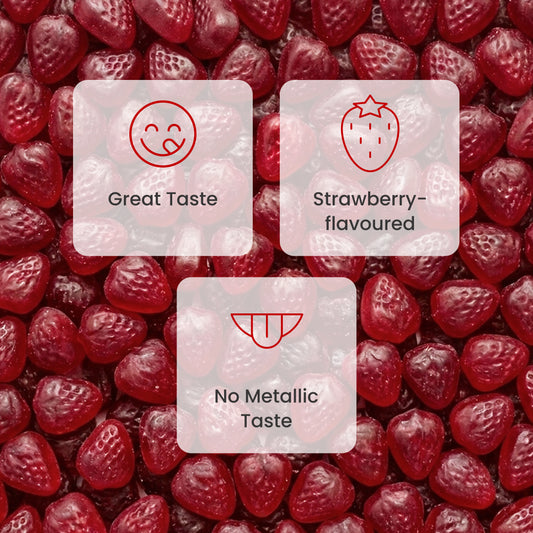
Each strawberry-flavoured gummy delivers 7 mg of iron using the same liposomal technology found in Ferosom's sachets and capsules. In other words, they’re designed for high absorption while being gentle on the stomach.
There's no metallic aftertaste, synthetic colours, or gelatin. Plus, they’re made in Canada, so you know you’re supporting local while supporting your family’s iron levels.
Suitable for ages 3 and up, Ferosom Gummies are the tastiest your child’s iron intake can get.
A little awareness goes a long way.
Iron deficiency can feel like a puzzle at first. But with the right information (and the right support), it's very manageable. Trust your instincts as a parent. If something feels off, it's always worth a conversation with your child's doctor.
And know that by reading this blog and staying educated, you’re already making a positive impact on your child’s health and wellbeing.
References:
Hamilton Health Sciences. (2004). Iron deficiency in children (8 years or younger) [PDF]. Hamilton Health Sciences. https://www.hamiltonhealthsciences.ca/wp-content/uploads/2019/08/IronDeficiencyChildren-trh.pdf
The Iron Infusion Clinic. (n.d.). Iron deficiency in children. Retrieved August 24, 2026, from https://theironinfusionclinic.com.au/iron-deficiency-in-children/
Your Child Team. (2018, January 23). Iron deficiency and anemia in kids: What to know. Michigan Medicine Health Lab. https://www.michiganmedicine.org/health-lab/iron-deficiency-and-anemia-kids-what-know
Liv Hospital. (2026, April 25). 11 behavioral symptoms of iron deficiency in toddlers: Crucial signs. Liv Hospital. https://int.livhospital.com/behavioral-symptoms-of-iron-deficiency-in-toddlers/
Miller, R. E. (Medical reviewer). (2024, May). Iron-deficiency anemia. Nemours KidsHealth. https://kidshealth.org/en/parents/ida.html